In groundbreaking research, Bose-Einstein condensates organize into self-bound droplets
In Professor Will's second Nature paper of the year, his team builds on successes in transforming ultracold gases of sodium–cesium (NaCs) molecules into BECs
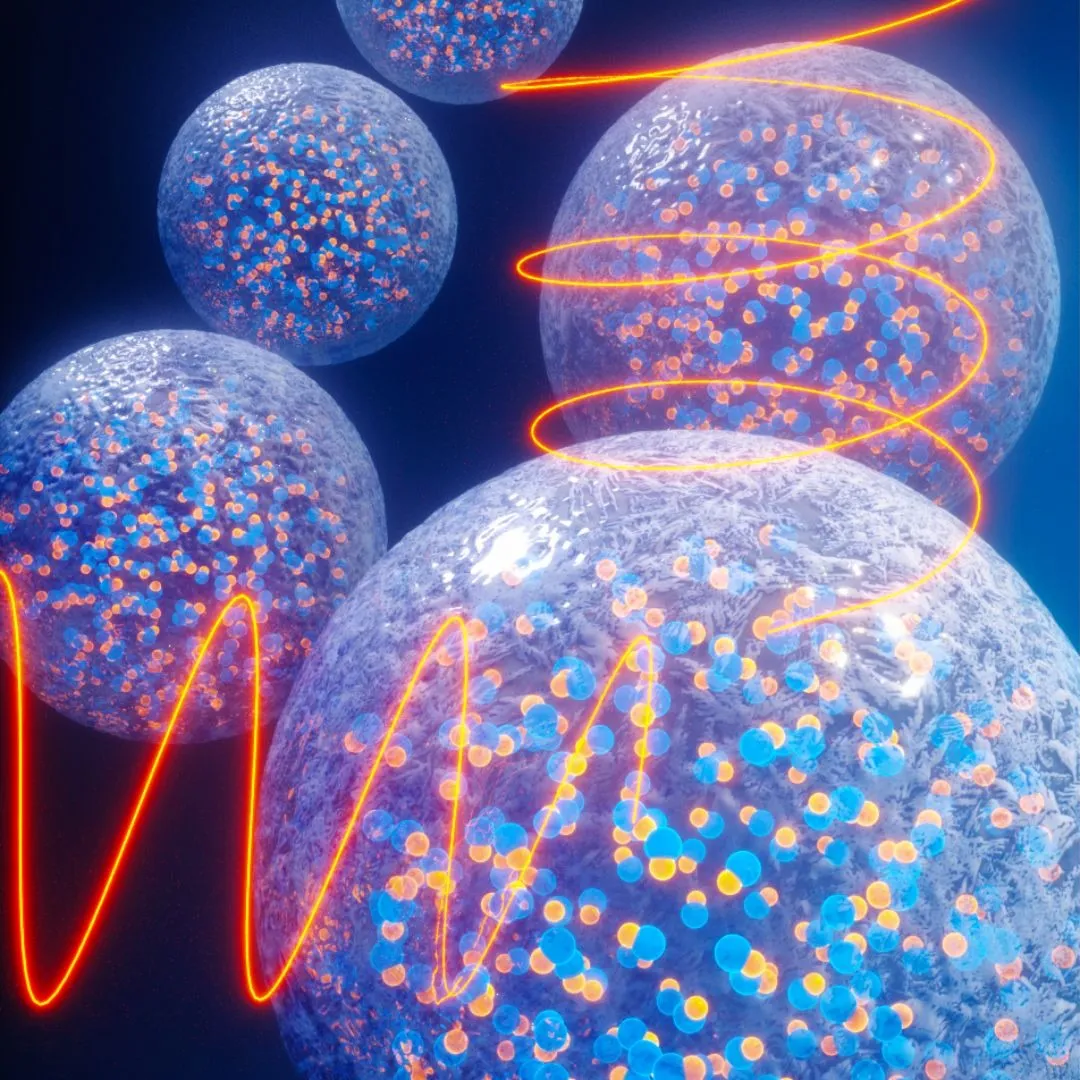
In case anyone needs a reminder, molecular bonds are the forces that literally hold our world together, affecting densities, boiling points, electronic properties, and other crucial aspects of how we use and design physical environments. The more bonds we can identify, the more opportunities we create to innovate with them. So it's no small matter (pun intended) when physicists like the research team under Columbia faculty member Sebastian Will observe never-before-seen molecular interactions like those demonstrated in their newest paper in Nature.
In "Observation of self-bound droplets of ultracold dipolar molecules," the authors explain how they devised a method called "microwave dressing" for controlling and coaxing Bose-Einstein condensates (BECs) to self-organize into dipolar droplets. This technique applies two microwave fields to BECs produced by sodium–caesium (NaCs) molecules and then fine-tunes the torque on the molecules' first rotational transitions. More specifically, dressed-state spectroscopy is used on molecules "to calibrate the Rabi frequencies of both microwave fields at their respective detunings."
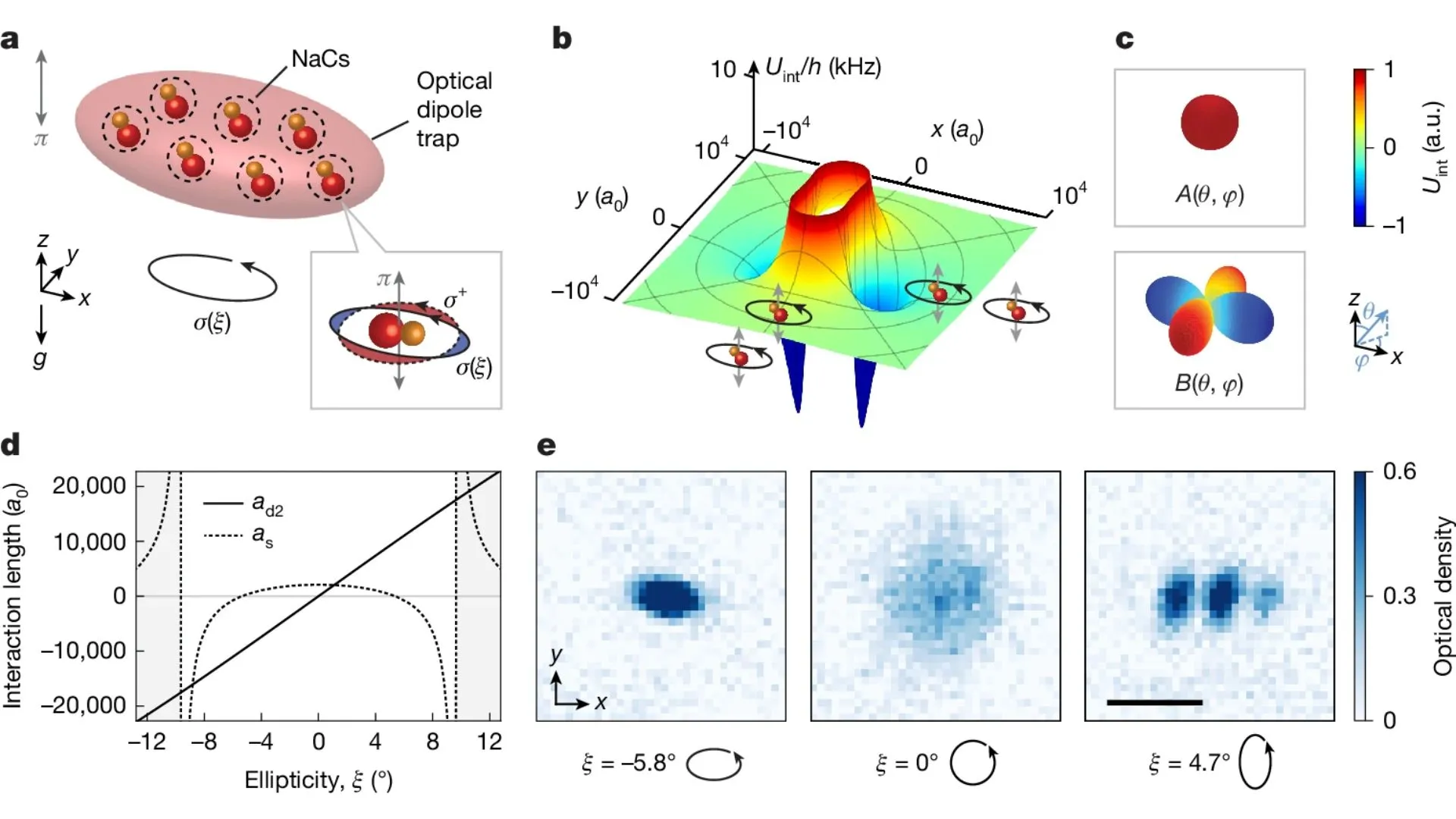
In dipolar molecules, there's an uneven distribution of electron density, meaning some sections of the molecule are a little more positive and some are a little more negative. In classical physics, dipole-dipole bonds are considered relatively weak, at least compared to ionic or covalent bonds. But as always with quantum matter, the laws of classical physics get shoved to the wayside, and the ways in which charges attract or repel each other can prompt startling behavior. By applying different tunings of the microwave dressing, the researchers observed that the strong dipolar interactions prompted the NaCs condensate to shrink, achieving increasingly stable droplets that ultimately increase a hundredfold in density.
The results of this experiment is a natural, or at least logical, progression of the group's previous accomplishments, when in 2024 they published yet another paper in Nature explaining how they suppressed two- and three-body losses in NaCs molecules to transform them into BECs. In the conclusions of this paper, they noted that "[t]he next important frontier will be to explore experimental pathways to turn the weakly interacting Bose gas into a strongly interacting system," even as dipole-dipole interactions capable of prompting quantum phases in ultracold molecular gases remained theoretical at best.
With this newest research, Will's team not only demonstrated this possibility, but did so with astounding levels of control. As PhD student and first author Siwei Zhang explained, “This is quantum mechanics under our control, and we are observing interactions that no one has ever seen before." Zhang, along with fellow first author and PhD student Weijun Yuan, were first authors on the 2024 paper, along with current Will Lab alumni Niccolò Bigagli, who also contributed to this most recent paper.
Their work in the Will Lab has not only identified an unprecedented phenomenon in quantum physics but has done so via means stable and nuanced enough to support a range of experimental applications for other curious-minded physicists. Perfect timing, too, given that Professor Will has been busy on Capitol Hill lending his expertise to a panel of experts advocating Congress for increased federal funding in quantum research. So what's next for the Will Lab team? They're already working on a higher-resolution imaging system to better explore and understand the dense droplet configurations into which these molecules organized.