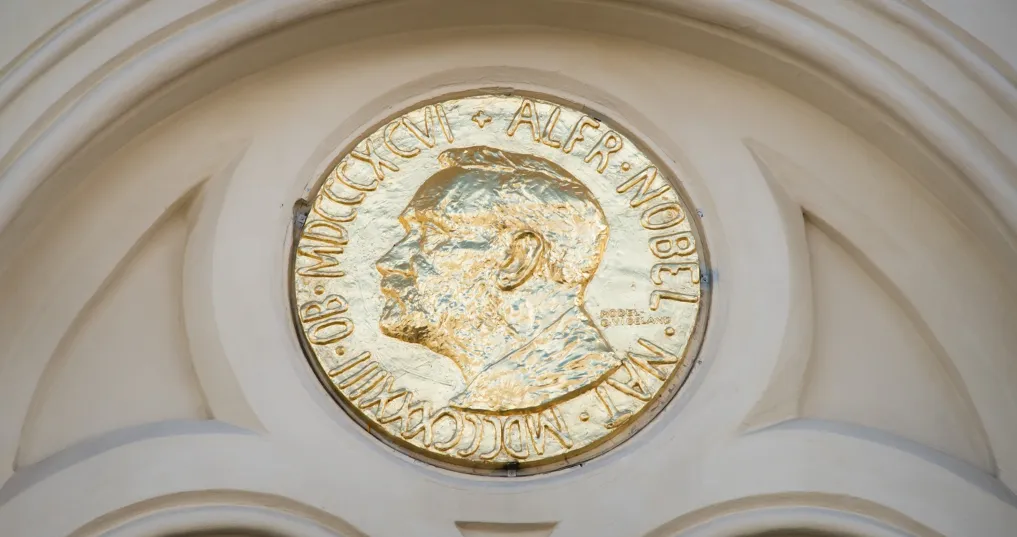
Nobel Prize Research
For more than a century, Columbia Physics has been at the forefront of scientific discovery, contributing to some of the most transformative advances in modern physics. Research conducted by Columbia faculty, students, and alumni has been recognized with numerous Nobel Prizes (more than ten Nobel Prize winners since 1944) and has shaped our understanding of the universe at every scale. Fifteen Nobel laureates in physics have served on the faculty, with five laureates having graduated from Columbia College, including the winner of the 2018 Nobel Prize in Physics, Arthur Ashkin. Another eleven Nobel laureates received their physics PhDs from Columbia. Of the Physics Nobel laureates that are associated with Columbia, thirteen received the award for their work in theoretical physics and eighteen for their experimental discoveries; ten performed their prize-winning research in Pupin Hall. Below is the full list of Columbia-affiliated winners:
Columbia's tradition of Nobel Prize-winning research is deeply connected to the Department's commitment to innovation, rigorous inquiry, and scientific collaboration. Many groundbreaking discoveries were made in Pupin Hall, where generations of physicists conducted pioneering research that continues to influence contemporary science and technology. Ten Nobel Prizes have been awarded for work performed within the Columbia Physics Department itself.
A Legacy of Discovery
The Department's Nobel Prize history spans a remarkable range of scientific achievements, including:
- The discovery of nuclear magnetic resonance and molecular beam techniques
- The development of the maser and foundational laser technologies
- Breakthroughs in quantum electrodynamics
- The discovery of parity violation and fundamental particle symmetries
- Advances in particle physics, cosmology, and quantum information science
- Research on superconductivity, quantum materials, and atomic physics
These discoveries have not only expanded scientific knowledge but have also enabled technologies that impact everyday life, including medical imaging, telecommunications, precision measurement, computing, and advanced materials research.