Exploring the universe at its infancy: A conversation with faculty member J. Colin Hill
In a follow-up conversation with Professor Hill, recent recipient of the 2026 New Horizons Prize, he reflects on his research, influences, and goals as a physicist
Located 17,000 feet above sea level in one of the driest, most remote environments on earth, the Atacama Cosmology Telescope in Chile captured some of the oldest light in the universe before being decommissioned in 2022. Through the work of physicists like Columbia Professor J. Colin Hill, a member of the Atacama Cosmology Telescope (ACT) project and Simons Observatory, the data ACT retrieved continues to yield astounding insights.
So astounding, in fact, that the prestigious Breakthrough Prizes awarded Hill and five of his fellow researchers the 2026 New Horizons in Physics. The Breakthrough Prizes, which are sometimes referred to as the “Oscars of Science,” have awarded more than $345 million since they were founded in 2012. Hill and the other 2026 New Horizon laureates were selected for their work in advancing “cosmic microwave background and supernovae cosmology.”
The cosmic microwave background (CMB) is the oldest light in the universe, leftover radiation from the Big Bang. Billions of years later, powerful telescopes can still detect CMB as faint residual microwaves, producing data like the E-mode polarization map below, captured by ACT. While you may not realize it at first glance, such dizzying images are the equivalent of a cosmological baby album, providing snapshots of the universe when it was a mere 380,000 years old.
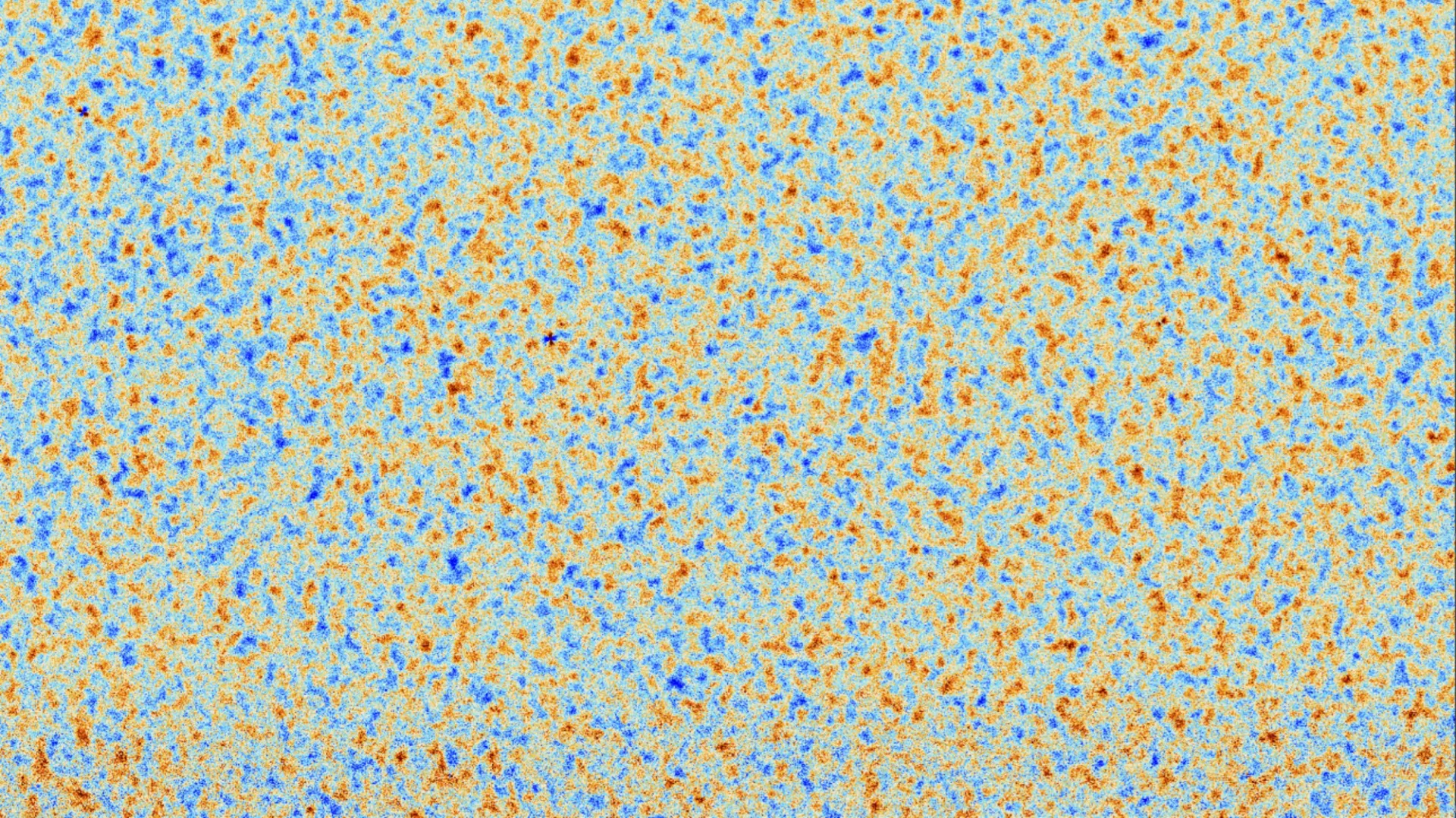
After filtering out disruptions such as quasars and other cosmological artifacts that can muddle the data, CMB researchers like Hill can begin to run statistical analyses on these images. The goal is to transform these seemingly random bursts of color into renderings of the mechanisms that formed our early universe.
While Professor Hill is certainly busy these days, balancing the demands of researching, teaching, and advising on top of winning awards, he kindly spared the time to reflect on this latest achievement and his hopes for the field of fundamental physics.
- How does it feel to receive the Breakthrough Prize?
It is an honor to share the prize with outstanding colleagues, including fellow CMB analysts Mathew Madhavacheril and Kimmy Wu. I am also proud of the fantastic students and postdocs in my group who have made major contributions over the past several years, without whom this would not have been possible.
- What are your research goals as a physicist?
The overarching goal of my research is to seek evidence of new fundamental physics in cosmological data, with a particular focus on the cosmic microwave background (CMB). Cosmology has already provided us with multiple forms of new physics, including dark matter and dark energy, but we would like to understand the detailed dynamics of these components and continue to search for other surprises. My group also works to understand processes that govern the formation of cosmic structure using data from the CMB and large-scale galaxy surveys, as this is necessary in order to enable the searches for new physics described above.
- Who or what have had the biggest influences on your research?
My interest in cosmology was sparked by the breakthroughs of the early 21st century, including the WMAP satellite mission results, which initiated the era of "precision cosmology" that we now live in. My Ph.D. advisor, David Spergel, played a key role in WMAP. His guidance had a major influence on my research trajectory, particularly in the early years of my career. I am also very grateful to my extraordinary colleagues in the Atacama Cosmology Telescope and Simons Observatory collaborations.
- What do you wish more people knew or understood about the work you're doing?
I find it amazing that we live in a time when very fundamental human questions, such as the origin and ultimate fate of the universe, can be addressed in a quantitative, empirical way. This incredible progress only happened in the past few decades. I am excited to see what new surprises the universe has in store for us, and I hope to share that excitement with others.