Support for Student & Professorship Endowments
Thanks to the support of partners who fund student and faculty endowments, we can offer more opportunities for recruitment, broaden our range of expertise, and retain exceptional minds.
The Flatiron Institute’s Center for Computational Quantum Physics sponsors the CCQ Joaquin Luttinger Graduate Student Fellowship, which supports a physics graduate student interested in concepts, theories, algorithms, and computational tools required to solve the quantum many-body problem and predict the behavior of materials and molecules of scientific and technological interest.
Luttinger Fellows:
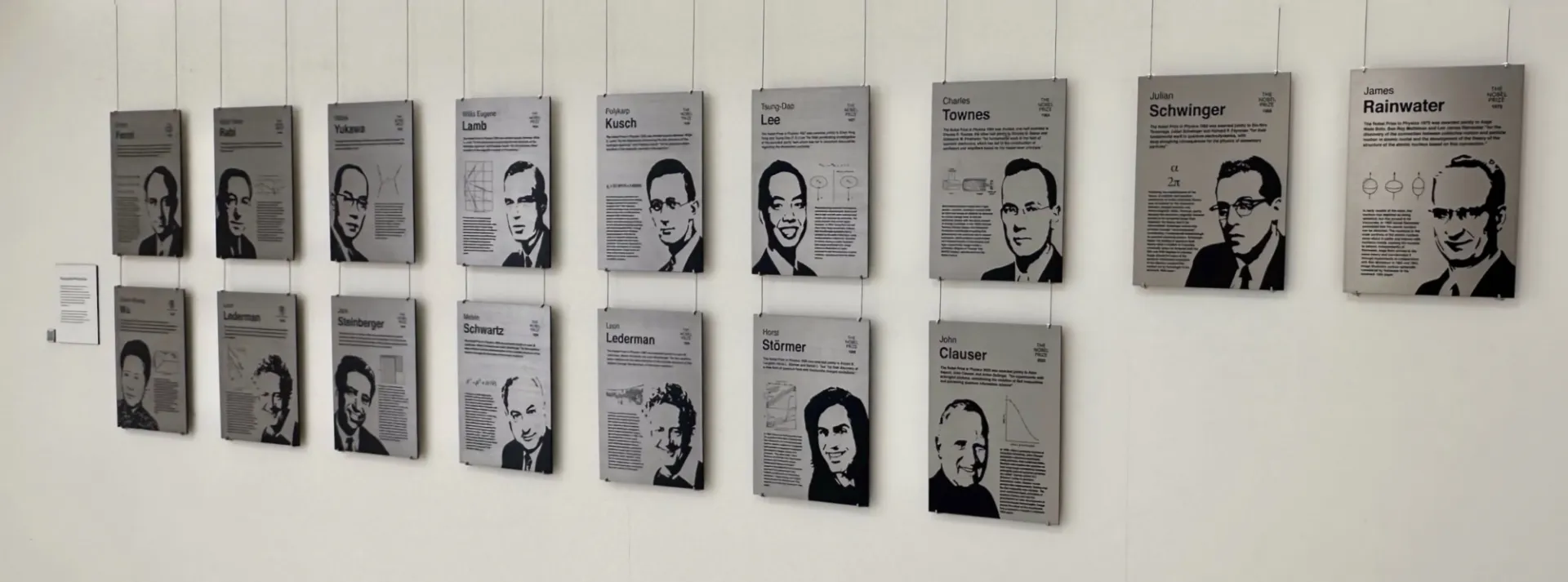
The Julian Schwinger Fellowship, supported by the generosity of the Julian Schwinger Foundation, honors Julian Schwinger’s time at Columbia as a theoretical physics doctoral student in the Department of Physics, under the guidance of statesman and scientist I.I. Rabi. With this gift, the Foundation aspires to support brilliant Columbia physicists whose PhD dissertation research in theoretical or experimental physics bridges theory and observation, advancing our understanding of experimentally observable physical phenomena.
Schwinger Fellows:
Established in 1999 through the generosity of Mrs. Lee M. Gunther-Mohr and Dr. Gerard Gunther-Mohr, the Townes Fellowship honors Nobel Prize–winning Professor Charles H. Townes and his invention of the maser at Columbia. The fellowship supports outstanding graduate students whose work contributes to the advancement of knowledge in optics, condensed matter physics, and related fields.
Francis and Charles Townes Fellows:
The Chien-Shiung Wu Scholarship was established thanks to the generosity of the family of Chien-Shiung Wu. Recipients are selected based on outstanding academic record and promise in the tradition of Chien-Shiung Wu who was a member of the Columbia University Physics Department from 1944-1980 and one of the greatest experimental physicists of all time.
Her groundbreaking experiments established the properties of weak interaction. Her most startling achievement was the observation of parity non-conservation in beta decay and she demonstrated that there is a fundamental difference between right and left. Her experiments were a large and essential step toward unifying the electromagnetic and weak interactions. She is also credited with the first experiment to document entangled photons. A 2023 article in Scientific American discusses her experiment in relation to the 2022 Nobel Prize in Physics, providing a fascinating review of her life and work.
C.S. Wu Scholarship Recipients
In 1956, Walter O. LeCroy graduated with a BA in Physics from Columbia and was soon after appointed Chief Electronics Engineer at Nevis Labs. Capitalizing on his expertise in instrumentation, he founded the LeCroy Research Systems Corporation in 1964 and became a pioneer of early digital storage. Having devoted his career to physics innovation, he ensured that Columbia could continue to support experimental physicists with a generous $1.5 million endowment in 1998 to establish the Walter O. LeCroy, Jr., Professorship.
Szabolcs Marka, who studies gravitational waves of cosmic origins and has made major contributions to LIGO (Laser Interferometer Gravitational-Wave Observatory) projects, is the current Walter O. LeCroy, Jr., Professor of Physics.
Sponsored Speaker Series and Colloquium Talks
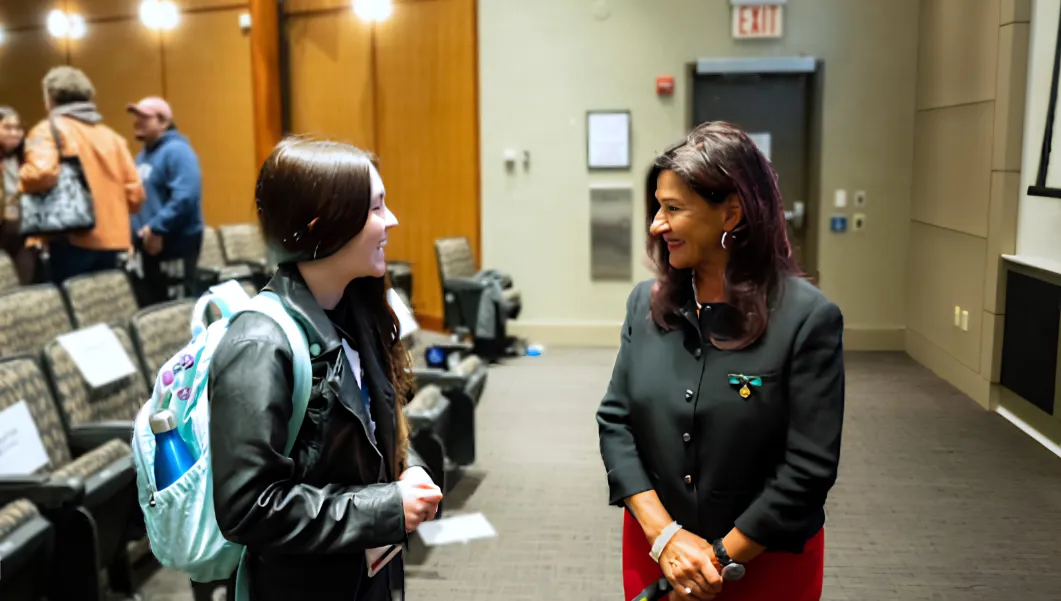
The Wu family are the generous benefactors of the C.S. Wu Colloquium Series, which highlights leading women scientists by showcasing their research through a dedicated colloquium platform, bringing their work to the forefront of the physics community.
Previous C.S. Wu Lecturers:
- Elena Aprile, "The Quest for Dark Matter" (2022-2023)
- Nadya Mason, "No Strain, No Gain: Modifying Transport in 2D Materials by Engineering Strain" (2023-2024)
- Angela Olinto, "Flying High: A High-Altitude Perspective of the Most Extreme Phenomena in the Universe" (2024-2025)
- Nathalie de Leon, "New platforms for quantum sensing and quantum computing” (2025-2026)
The Julian Schwinger Lectureship brings thought leaders in physics to Columbia present broad views of the most exciting developments in modern physics.
The lectureship commemorates the scientific legacy of Nobel laureate (1965) and Columbia alumnus Julian Schwinger (BA: 1936, PhD: 1939). His work fundamentally advanced theoretical physics and its applications to fields ranging from high energy particle physics to condensed matter physics and electrical engineering, and his ideas profoundly influence physics as it is practiced today. This lecture series was instituted in honor of a generous gift from the Julian Schwinger Foundation.
Previous Schwinger Colloquium Speakers:
- Frank Wilczek, "Symmetries of Time" (2024)
- Duncan Haldane, "Quantum Geometry and the Quantum Hall Effect" (2025)
The lecture is supported by a generous gift from the family of Ernest Kempton Adams, a promising graduate of Columbia’s School of Mines (now the Fu foundation School of Engineering and Applied Science). Adams earned a degree in electrical engineering in 1897, followed by a master of arts in 1898, only to pass away in the summer of 1904 at the untimely age of 30. That December, his family donated Adams's collection of scientific equipment to the university and created a $50,000 endowment in his memory.
The ambitious lectureship that sprung from their generosity “marked the beginning of America’s engagement with modern physics,” according to physicist and Columbia faculty member Andrew Millis, and was the first and only occasion in which several leading European physicists visited or lectured in North America.
With the advent of the First World War, the series lapsed for nearly one hundred years. It resumed in 2012, where it continues to bring leading physicists of the 21st century to Columbia.
Previous Ernest Kempton Adams Lecturers Include:
- Vilhelm Bjerknes, “Fields of Force” (1905-06)
- Hendrik Lorentz, “The Theory of Electrons and its Application to the Phenomena of Light and Radiant Heat” (1906-1907)
- Max Planck, “Eight Lectures on Theoretical Physics” (1909)
- Carl Runge, “Graphical Methods” (1909-1910)
- Jacques Hadamard, “Four Lectures on Mathematics” (1911)
- Robert W. Wood, “Researches in Physical Optics, Part I” (1913)
- Wilhelm Wien, “Neure Probleme der theoretischen Physik” (1913)
- J.C. Séamus Davis (2012)
- Dmitri Basov (2013)
- Alessandra Lanzara (2017)
- Immanuel Bloch (2018)
- Sir Michael Berry (2022)
- Mikhail Lukin (2025)
Dedicated Environments for Collaboration
Collaboration is the backbone of scientific research. Herbert Anderson met lifelong collaborator and future Nobel Laureate Enrico Fermi after Fermi was invited to join Columbia. Fermi recruited Chien-Shiung Wu to the Manhattan Project, after which Columbia hired her as faculty. Wu designed a groundbreaking experiment after she was approached by Columbia colleagues T.D. Lee and Chen Ning Yang about a theory on the laws of parity that would end up winning Lee and Yang the 1957 Nobel Prize in Physics.
These collaborations played out not just in laboratories but also in hallways, classrooms, break rooms, and famously, even the basement of Pupin Hall. But while our department continues to grow, Pupin Hall does not. Fortunately, several partners in recent years have dedicated their support to the creation of new common spaces throughout Pupin Hall, fostering ever more serendipitous encounters and collaborations.
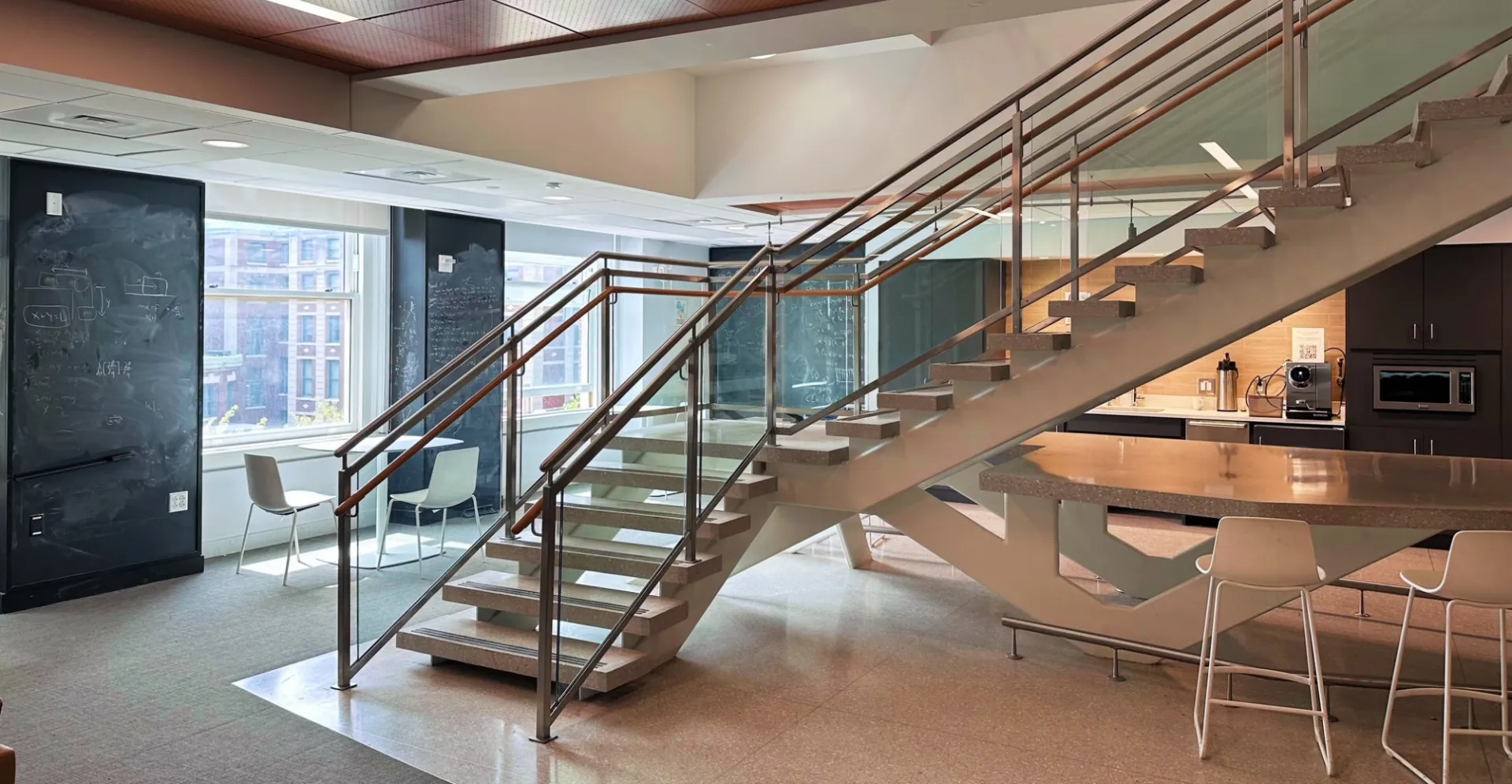
Led by noted theoretical physicist and Columbia faculty member Brian Greene, the Center for Theoretical Physics officially opened its doors during the 2015-2016 academic year. The two-story space occupies the eastern corner of Pupin's eighth and ninth floors. The transformation was overseen by global design firm Perkins Eastman. As noted on their website, the space was "[d]esigned with the express intent to increase face-to-face interactions" and it "fosters an environment conducive to spontaneous collaboration among scientists and students."

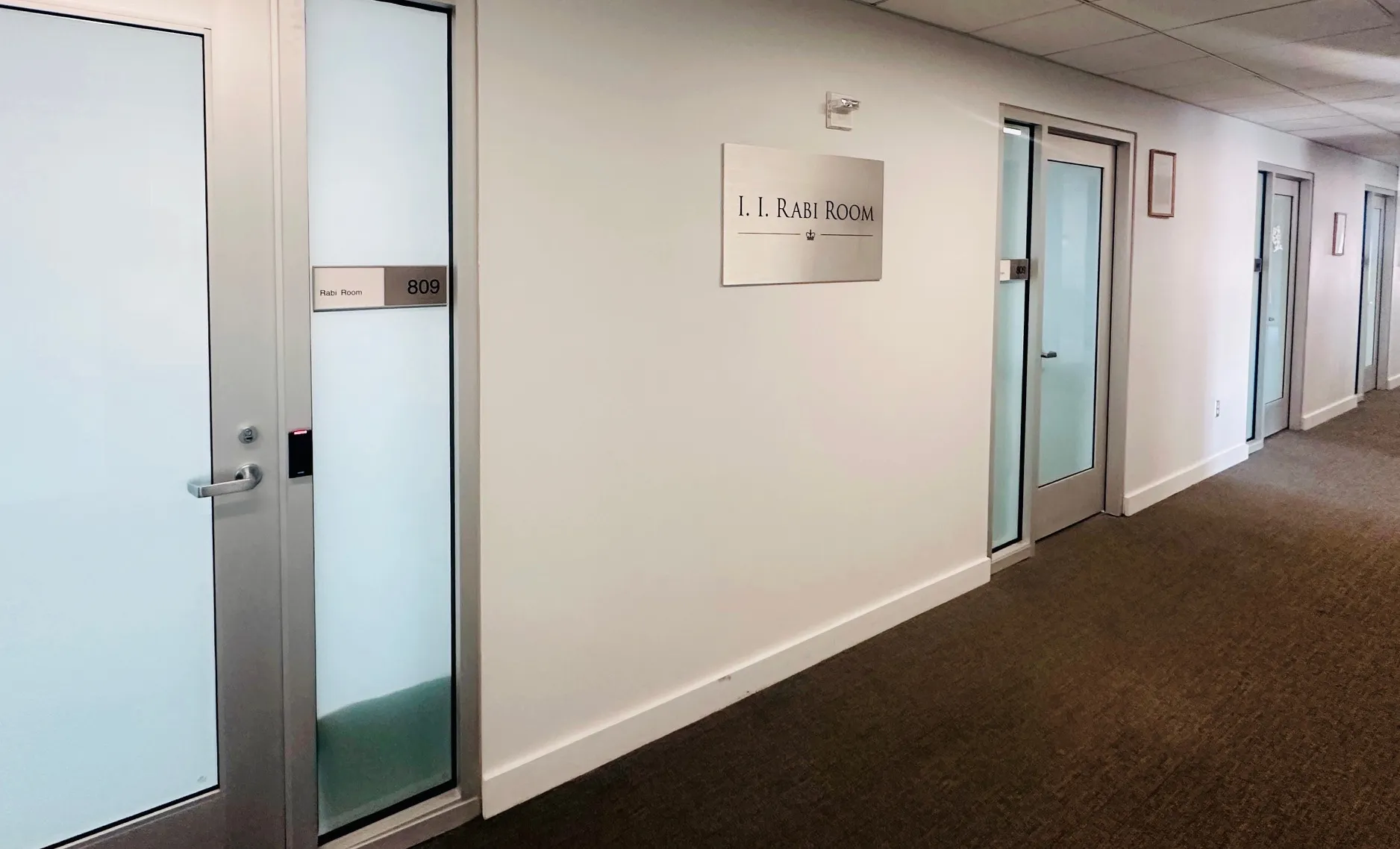
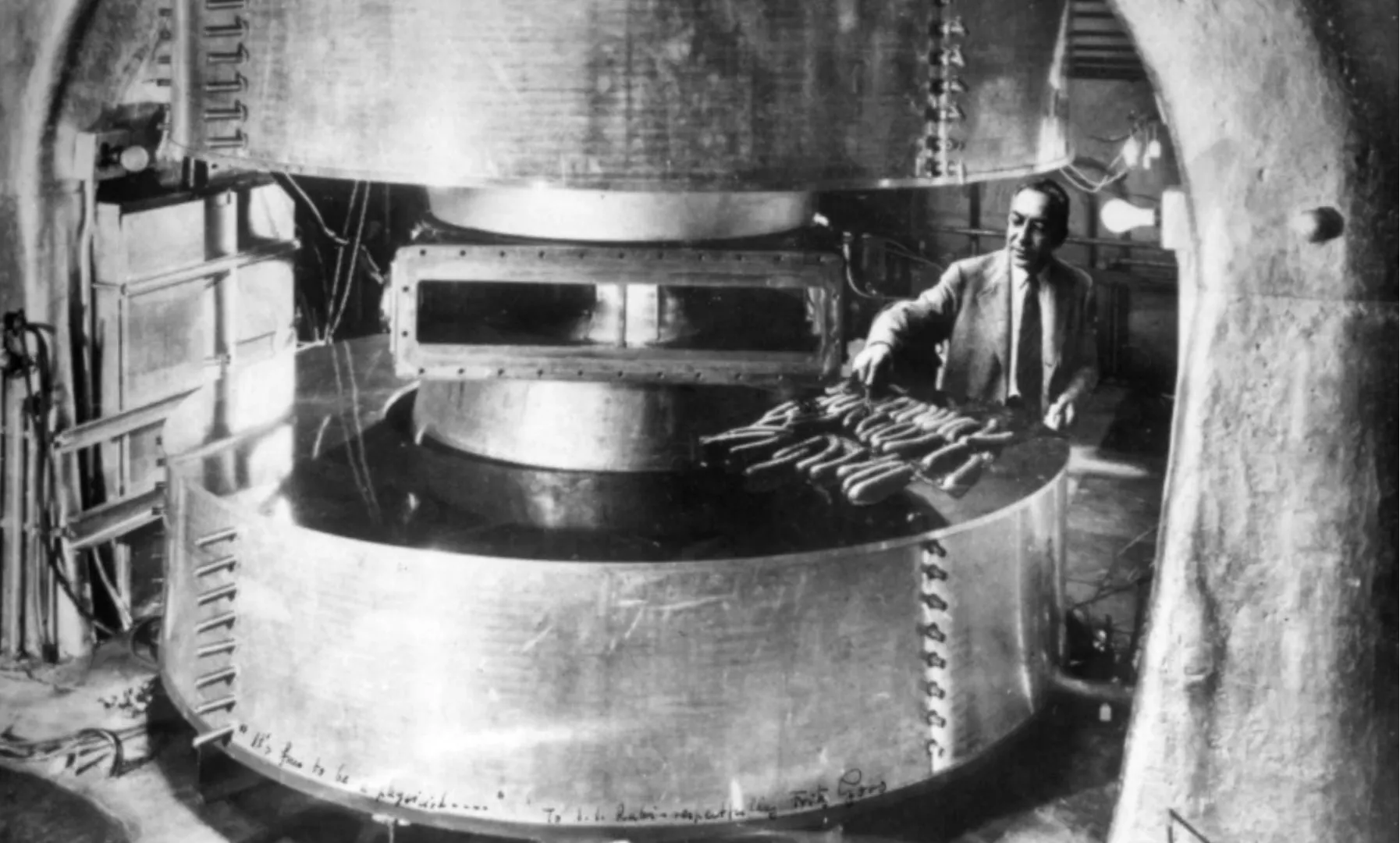
Nestled within the Theory Center is the I.I. Rabi Room, occupying the same space in Pupin Hall where the Nobel Prize-winning faculty member had his office for more than 50 years. While this Ask Alma's Owl column expands on Rabi's biography and the renovation of the I.I. Rabi Room, the story of Rabi cooking hot dogs on the cyclotron in Pupin basement is sadly not true. The photo, however, is real. It was doctored and given to Rabi as a gag gift by his good friend, acclaimed science photographer and Life magazine staffer Fritz Goro. Written in tiny cursive letters along the bottom of the cyclotron, it reads: "It's good to be a physicist...To I. I. Rabi, respectfully Fritz Goro."