In new Nature article, Columbia researchers ignite potential of quantum technologies with experimental platform
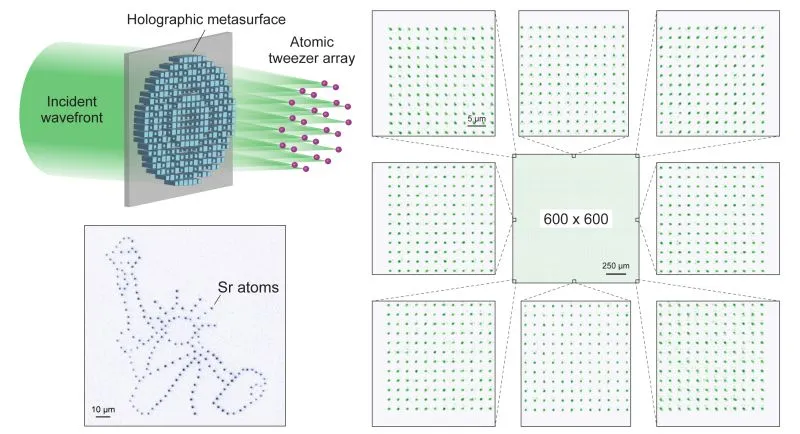
Combining optical tweezer arrays with metasurfaces, a team of researchers from Columbia's Quantum Initiative have unveiled an exciting alternative for generating arrays that could exceed 100,000 traps, according to their new study published in Nature. The study was helmed by two graduate students, Aaron Holman from the Physics department and Yuan Xu from the School of Engineering, working under the respective guidance of faculty members Sebastian Will and Nanfang Yu.
In the article, the authors explain how limitations in optical resolution have typically constrained arrays to around 10,000 traps. But metasurfaces -- flat optical devices that Yu compares to a "superposition of tens of thousands of flat lenses over the same plane...that can simultaneously produce tens of thousands of focal spots” -- sidestep these issues, enabling unprecedented scalability in neutral-atom arrays.
This has enormous implications for the future and potential of quantum technologies, including a dramatic increase in the performance of quantum computers. Learn more about the team's research here and visit Nature to read the new study.