Aprile Group's paper honored as a Physical Review Letters (PRL) Selection of the Year for 2025
Columbia physicists navigate the "neutrino fog" in award-winning dark matter search
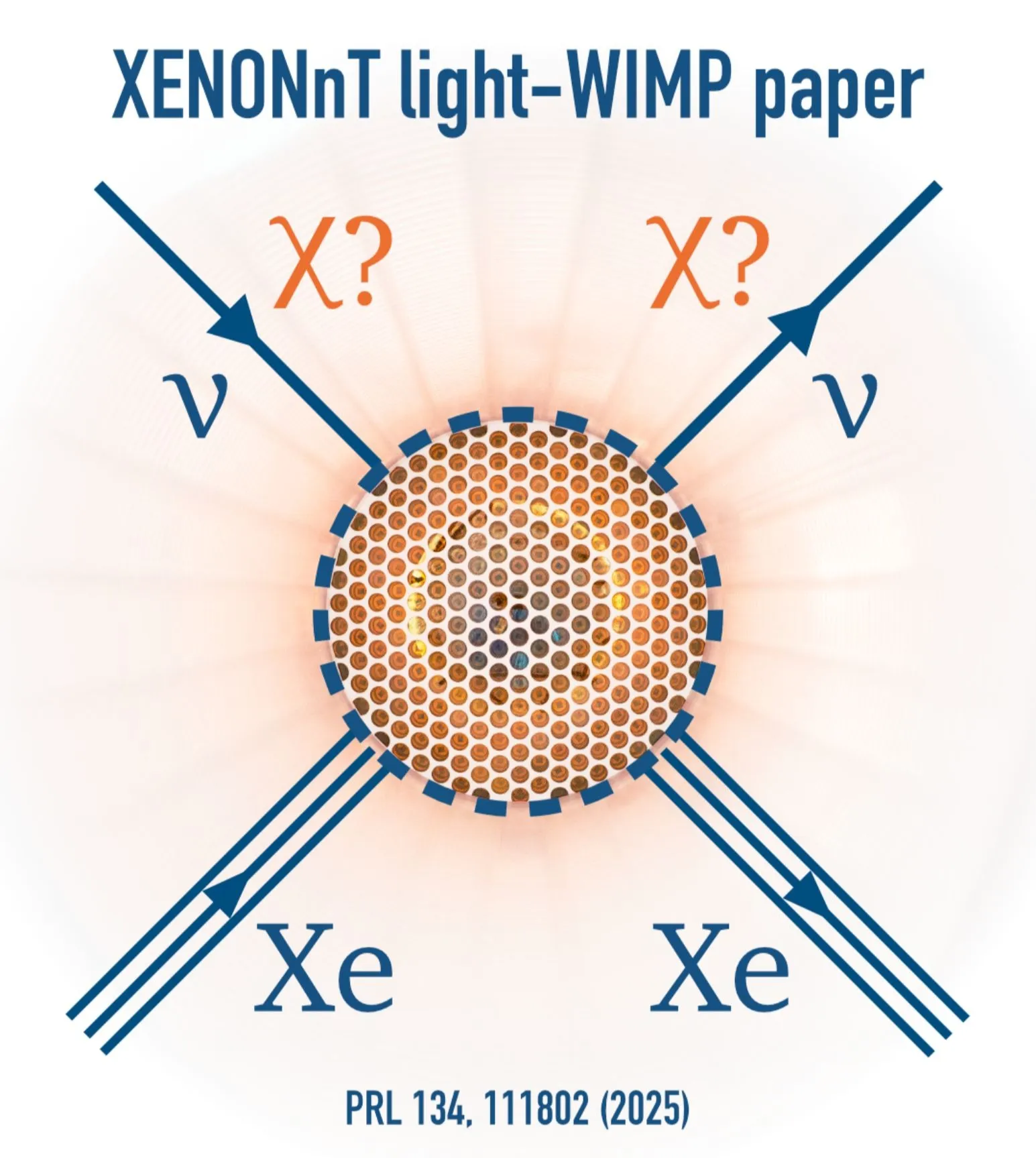
The Aprile Group at Columbia University, in collaboration with the international XENONnT project, is celebrating a major milestone in the search for dark matter. Their paper, “First Search for Light Dark Matter in the Neutrino Fog with XENONnT,” was recently honored by the American Physical Society as a PRL Selection of the Year for 2025. This marks the second consecutive year the experiment has received this distinction.
Peering Through the Glare
To hunt for dark matter, the XENONnT experiment operates 1,400 meters underground at the INFN Laboratori Nazionali del Gran Sasso in Italy. This depth is necessary to shield the detector from the constant "noise" of cosmic radiation at the surface. However, as detector sensitivity reaches unprecedented levels, a new challenge has emerged: the neutrino fog.
The neutrino fog is a fundamental physical boundary where the detector begins to pick up a "glare" of Boron-8 neutrinos originating from the core of the sun. Because these tiny particles produce signals that nearly perfectly mimic the light WIMPs (weakly interacting massive particles) the team is searching for, they create a background that was once thought to be an impenetrable limit.
Local Leadership
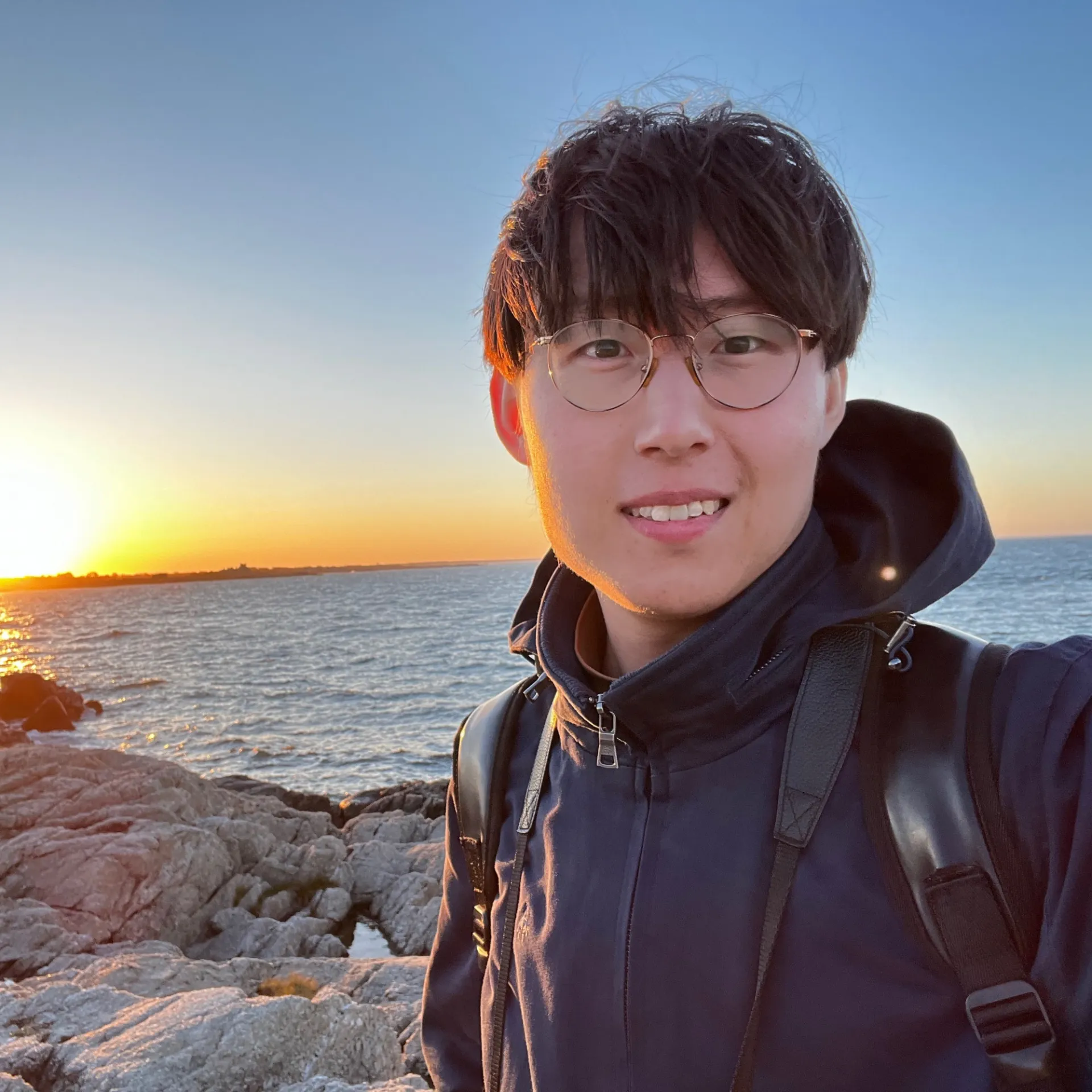
Leading this pioneering analysis was Shenyang Shi, a graduate student in the Columbia Astrophysics Laboratory. As one of the lead analysts and corresponding authors, Shi played a pivotal role in developing the innovative techniques required to navigate this new frontier. By successfully lowering the energy threshold of the detector, the team was able to set world-leading limits on dark matter interactions, effectively proving that XENONnT is operating at the absolute limit of current physical possibility.
Looking Ahead
This recognition highlights Columbia’s continued leadership in experimental particle astrophysics. As the collaboration continues to refine its search, learning to "see through" the neutrino fog remains a critical step in the eventual discovery of dark matter.
Speaking of looking ahead, we want to wish Shenyang an early congratulations on the upcoming defense of his thesis "Search for Particle Dark Matter with XENONnT: Weakly Proton Mass Candidates" on April 20th -- keep up the amazing work, Shenyang!
Read the full paper in PRL: Phys. Rev. Lett. 134, 111802