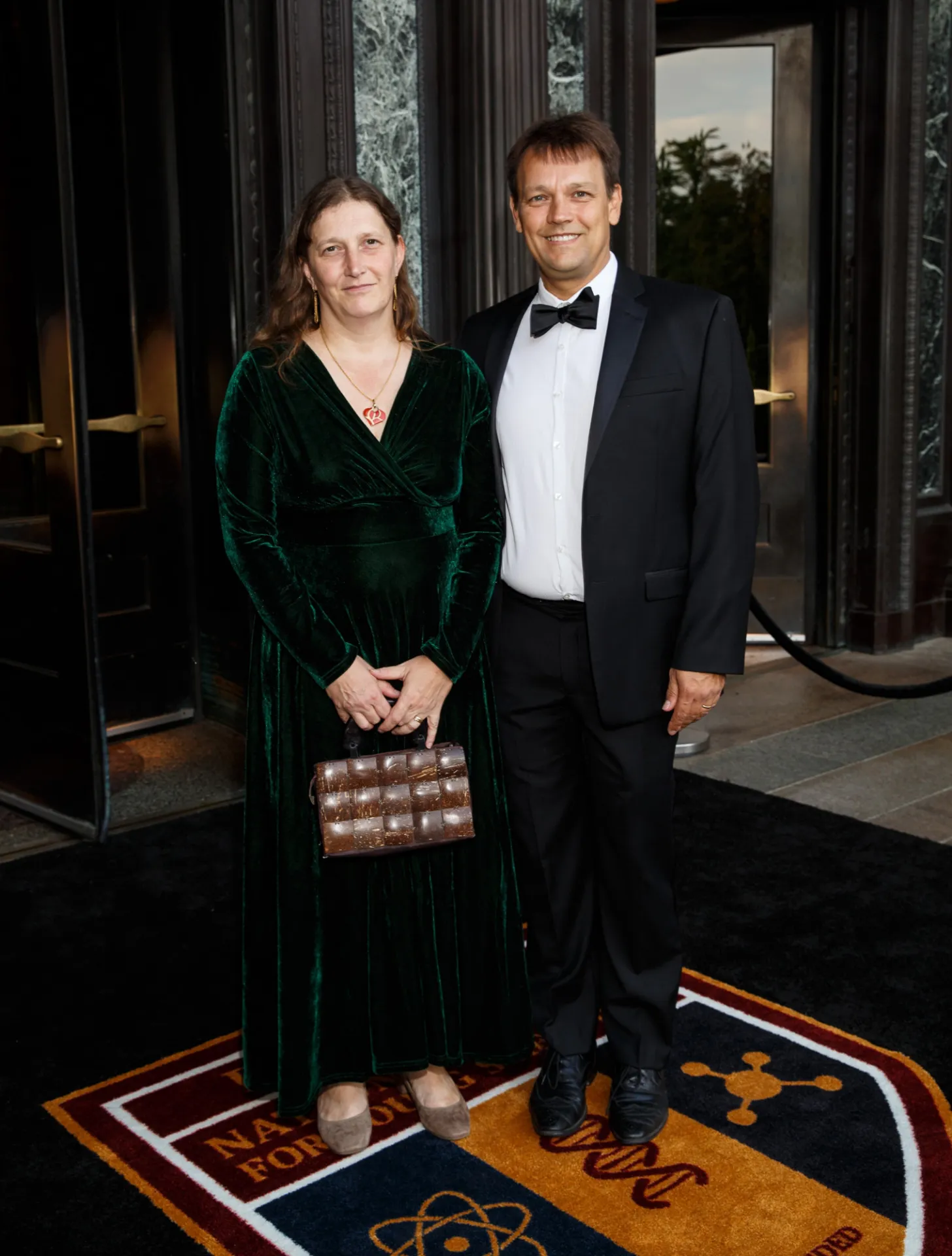
CU Physicists Help Establish UN University's Newest Research Institute
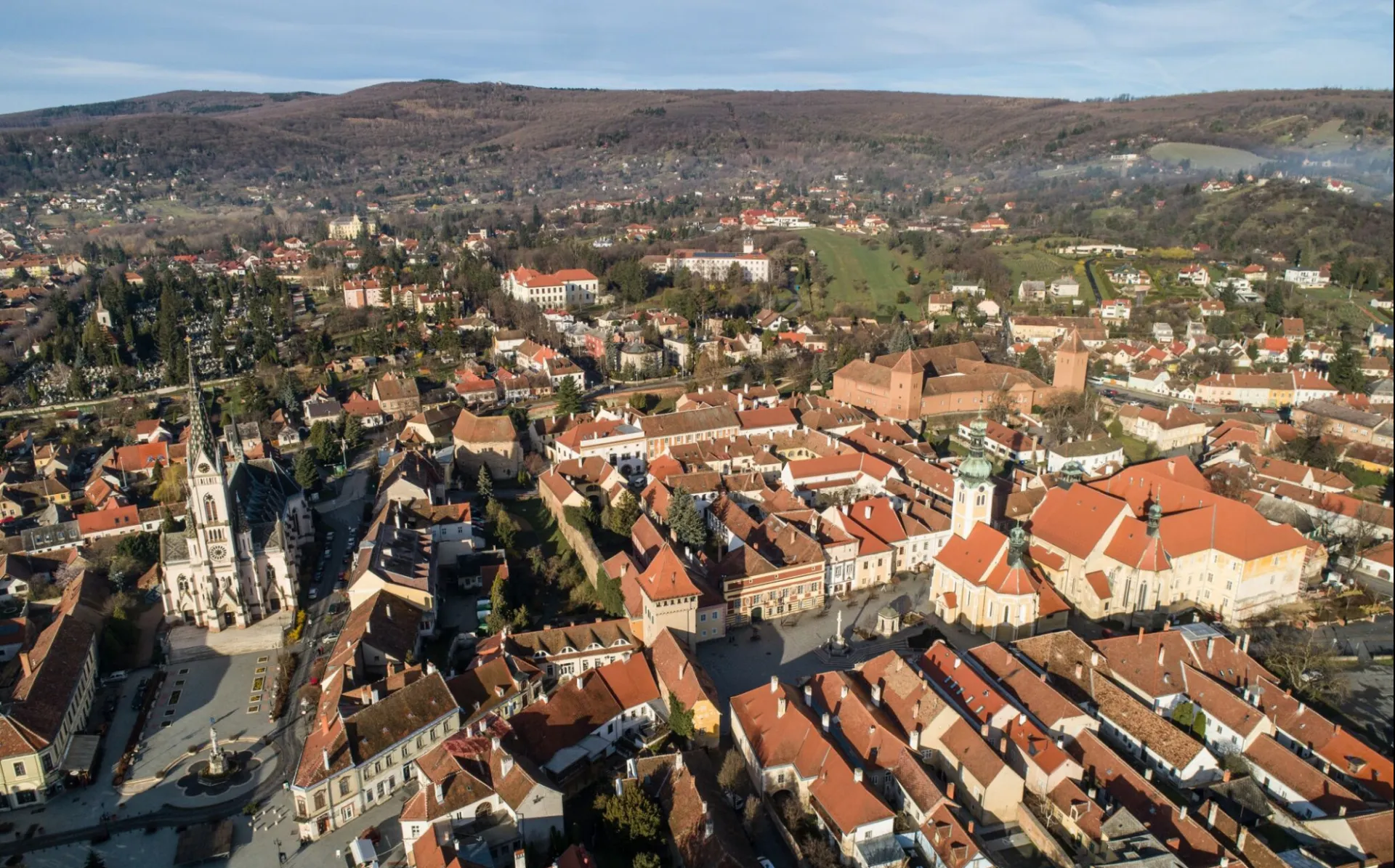
Experimental physicists Szabolcs Márka and Zsuzsa Márka have built their careers in astrophysics, but you could say their impact exceeds the cosmos. In addition to producing groundbreaking research on gravitational waves, they have spent years supporting and shaping the development of a new United Nations University (UNU) institute in Kőszeg, Hungary. Research conducted at the new institute will use futures literacy and foresight methodologies to address critical geopolitical issues like peace, security, and transformative technologies, the latter of which both scientists are very familiar.
Dr. Zsuzsa Márka, a research scientist with the Columbia Astrophysics Laboratory, and faculty member Dr. Szabolcs Márka, Walter O. LeCroy, Jr. Professor of Physics, are co-discoverers of cosmic gravitational waves. They created mission critical detector systems and pioneered multimessenger astrophysics by integrating gravitational waves, neutrinos, and gamma rays. Their current work advances Synergistic Astrophysics by combining humanity’s scientific instruments, mathematics, and data into a single, global sensor to better understand the universe.
Their involvement with the new UNU institute in Kőszeg complements a long-standing commitment to use science creatively to improve life on Earth for all, a goal they have demonstrated through their additional discoveries in biophysics, as well as Dr. Zsuzsa Márka's advocacy for high-quality science curriculum in early education.

UNU, which celebrated its 50th anniversary last year, grew from a proposal in 1969 by UN Secretary-General U Thant to create a "United Nations University, truly international in character and devoted to the Charter objectives of peace and progress." The UN General Assembly subsequently adopted UNU's establishment in December 1972. Its Tokyo headquarters formally opened in 1975 and since then, UNU has been collaborating with universities and research institutions in UN member states to provide postgraduate research, education, and teaching opportunities that address pressing global issues of human welfare and development.
The new campus in Hungary will be UNU's fourteenth global research institute and the first of its kind in Central and Eastern Europe. Built into the institute's mission is a recognition that geopolitical challenges, including rapid technological advancement, often disproportionately affect low-income nations and communities, while progress on these issues can be profoundly more impactful for these populations. As such, the institute will prioritize work that can meaningfully shape and contribute to policies and capacity-building in the Global South.
"Beyond seeking fundamental discoveries, scientists should also invest in improving human life on Earth by utilizing their expertise and creativity." - Prof. Szabolcs Márka